

SC305
Compact 3-way solution

FR:
50 Hz - 21 kHz

Woofer:
5"

Max SPL:
108 dB


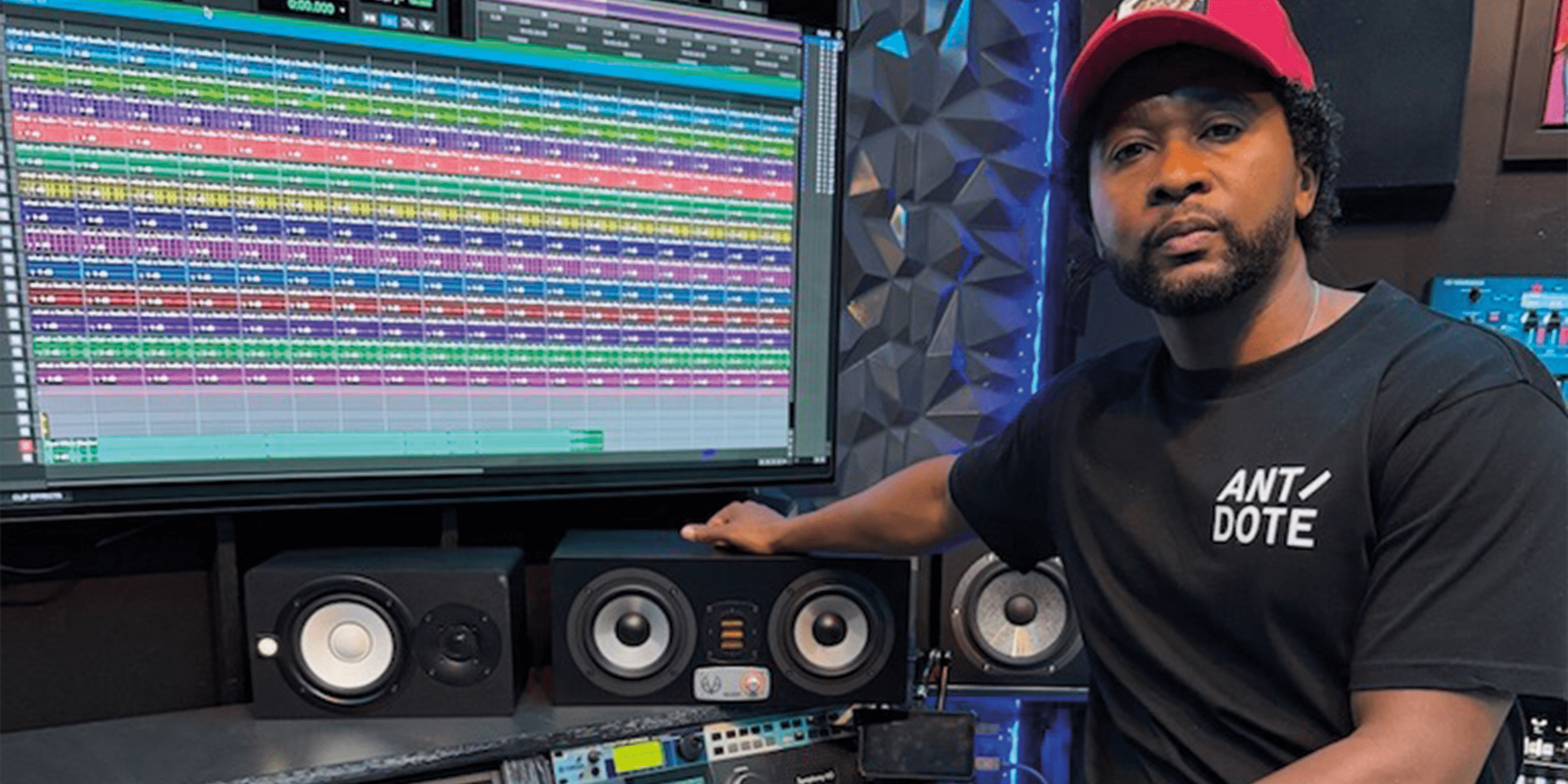
Zaytoven Chooses EVE Audio for his Atlanta Studio
Zaytoven, American producer, programmer, and musician has added EVE Audio to his studio in Atlanta, Georgia.
Zaytoven is best known for being the pioneer of Trap Music from Atlanta and one of hip hop's greatest producers.
At his studio complex in Atlanta named Patchwerk, Zaytoven has turned to EVE Audio as his monitors of choice.
On the EVE Audio SC305 monitors that he and his team have added, Zaytoven says, “I use these for making beats, I use these speakers to mix, they fit perfectly in the studio.”
Gucci Mane, Usher and more
The producer has worked and collaborated with artists including Gucci Mane, Usher, Future, Young Dolph, Migos, Lecrae, Lil Yachty, Chief Keef, Young Scooter, B.o.B, Boosie Badazz, Waka Flocka Flame, 21 Savage and many more.
Zaytoven's earned a Grammy Award with his work on Usher's album Raymond v. Raymond and grew his serious reputation in the hip-hop world. He helped shaped the sound of artists such as OJ da Juiceman, Yung L.A., Yung Ralph, Shop Boyz, Lil Scrappy, Jagged Edge, and Gorilla Zoe.
The AMT tweeter
The EVE Audio SC305 monitors is a 3-way monitoring solution in a compact cabinet with a wide frequency range from 50 Hz – 21 kHz, and a maximum SPL of 108dB. The tweeter, as with all EVE Audio monitors, is an AMT tweeter. AMT stands for Air Motion Transformer. Unlike a dome tweeter (which moves forward and backward in a “piston” motion), an AMT uses a folded (pleated) diaphragm. The diaphragm (often a lightweight film) has conductive traces and is placed in a strong magnetic field. When driven by the audio signal, the folds expand and collapse (laterally) like a bellows, squeezing air between them. That accelerated air is pushed out, producing sound. Because of the folding, the effective drive area is increased, and the motion needed is small, which tends to allow for fast transient response and lower distortion.
What does this all mean? AMTs tend to reproduce very high frequencies well, with clarity. Because of smoother response and lower distortion in the high end, AMTs often feel “easier” to listen to over long sessions — less harshness especially at higher volumes. Importantly for producers and mix engineers this means less listening fatigue.
Subtle things like air, overtones, harmonics, fine transient detail tend to come through more clearly with a well-implemented AMT. This helps in mixing, mastering, critical listening.

© 2026 EVE Audio GmbH


